

Global trade frictions including tariff disputes have posed challenges for exports and investor confidence, and economists expect the Budget to address the challenges.

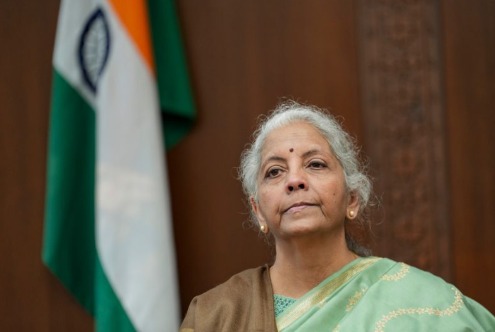
Finance Minister Nirmala Sitharaman will present her ninth consecutive Union Budget for the fiscal year April 2026–March 2027 on Sunday, February 1, 2026 at 11 a.m. in the Lok Sabha, marking the first time in recent history that the Budget is being presented on a Sunday.
This annual financial statement outlines the government’s revenue, spending and policy priorities and sets the economic direction for the coming year, including allocations for infrastructure, taxes, welfare programmes and reforms.
Economic Context Ahead of the Budget
The Budget arrives against a backdrop of steady domestic demand and moderating inflation, amid ongoing global economic uncertainties such as geopolitical tensions and volatile commodity markets. India’s economic growth for 2026–27 is projected at 6.8–7.2 per cent, slightly lower than the current year, according to the Economic Survey tabled in Parliament.
Global trade frictions including tariff disputes have posed challenges for exports and investor confidence, and economists expect the Budget to address the challenges.
What the Government Is Expected to Focus On
- Growth and Stability: Analysts expect measures to sustain growth momentum while maintaining fiscal discipline. Continued emphasis on capital expenditure spending on roads, railways, defence and urban infrastructure is likely to remain central to the Budget, aiming to crowd in private investment and support economic expansion.
- Taxes and Fiscal Balance: Major tax rate changes are not broadly expected. Officials have signalled a preference for stability and predictability in personal income tax and corporate tax to foster investor confidence and consumption. Some incremental relief for taxpayers is possible, particularly after significant tax adjustments in recent years.
- Jobs and Manufacturing: Job creation is anticipated to be a priority, with potential incentives for labour-intensive manufacturing, skill development and apprenticeships. Support for MSMEs through enhanced allocations or credit guarantees may also feature.
- Green Transition & Energy Security: With India’s commitments to renewable energy and clean technology, the Budget could strengthen support for green hydrogen, battery storage, electric mobility and renewable energy manufacturing. Allocations for oil and gas infrastructure may also be maintained to ensure energy security amid global price swings.
- Support for States: Given the approaching state elections in several regions, the Budget may include measures or allocations aimed at supporting states without loosening overall fiscal discipline.
Challenges Ahead
Finance Minister Sitharaman faces a difficult balancing act: Boosting consumption and investment, supporting job creation and infrastructure, while keeping the fiscal deficit on a steady path. Recent tax cuts have reduced government revenue, limiting fiscal flexibility. Maintaining investor confidence especially amid global uncertainty and currency pressures will be a key task.
How to Watch
The Budget speech will be broadcast live on Doordarshan, Sansad TV and various online platforms, with updates available on official government channels and news websites.