
“Katha Kahe so Kathak Kahave” – it is pronounced in Hindi which means it tells a story so it is called Kathak. It has three main characteristics – Story, Expressions and Lessons.

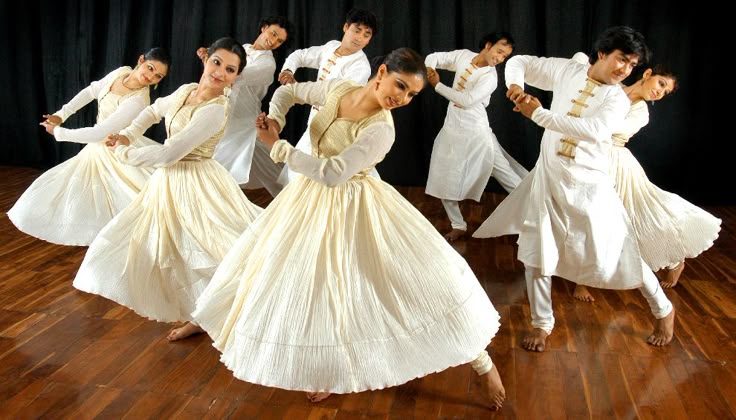
Kathak is the classical dance form of India. The word ‘Kathak’ in ancient times meant a ‘story teller’. It holds a prominent place in the traditional dances of India and is loved worldwide for its nature of telling a story.
Kathak, very beautifully is explained in one line that is:
“Katha Kahe so Kathak Kahave” – it is pronounced in Hindi which means it tells a story so it is called Kathak. It has three main characteristics – Story, Expressions and Lessons.
The dance, when it has all these three aspects it can be considered as Kathak well performed. The Story of Kathak is felt by the Rasas namely:
- Shringara Rasa (Smile, Happiness)
- Hasya Rasa (Laziness)
- Karuna Rasa (Distraction)
- Raudra (Anger)
- Veera Rasa (Pride)
- Bhayanka (Fear)
- Vibhatsa (Illness)
- Adbhuta Rasa (Joy)
- Shanta Rasa (Silence)
- Vatsalya (Attachment)
- Bhakti Rasa (Rememberance)
Evolution of Kathak

Natya Shastra Grantha is an ancient scripture that contains texts on the art forms. This was written by Bharat Muni. It is said that Brahma Ji created the fifth Veda also called the Natya Veda. He created it on demand of God Indra. They used all the Vedas and took particular aspects like Pathya from Rigveda, Sangeet from Samaveda, Abhinaya from Yajurveda and Rasa from Attharveda.
Moreover, to prepare the Natya Veda the two very ancient dances: The Tandava of Shiva and the Lasya of Maa Parvati were taken in consideration. The elementary attitude in the dance form was added by Lord Vishnu. God Indra and other deities were unable to promote it and then it was handed over to Bharat Muni.
Origin of Dance
Brahma ji told Bharat Muni to present “Tripurdah Dim” in front of Lord Shiva after the presentation of ” Amritmantha.” It was liked a lot by Lord Shiva that he ordered Tandu Ji to add Nritya into it and teach Nritya to Bharat Muni Ji.
Tandu ji was Shiva’s disciple and Bharat Muni’s teacher. Further, Bharat Muni taught it to his hundred sons.
Maa Parvati used to perform Lasya. It is a soft dance movement with notable expressions. Maa Parvati taught Lasya to Vanasur’s daughter named Usha. She then got married to the great grandson of Lord Krishna named Anirudha who lived in Dwarika. Usha taught her Nritya to the women of Dwarika and this is how it spread on earth.
The Natya Shastra Grantha is the work of Bharat Muni Ji. This ancient text written in Sanskrit holds a lot of power from the creator of the world. Every art form is worshipped. This is the beauty of Indian culture that is guiding us with each and every step till date.