

The word Bharatnatyam was formed by splitting “Bh”as bhava, “Ra” as rasa , Ta” For taal and natyam which means abhinaya.

Bharatnatyam is the classical dance form of Tamil Nadu of Southern India. The word Bharatnatyam was formed by splitting “Bh”as bhava, “Ra” as rasa , Ta” For taal and natyam which means abhinaya. Bharatnatyam is a dance form with the key concept of evoking emotions.
The Bharatnatyam earlier was known as “Dasi Attam”. Dasi means ‘devdasi’ and attam means ‘play’. There were three dasies namely Rajdasies, Devdasies and Swadasies. They served as court dancers, temple dancers and play dancers respectively.
Teachers or gurus of Bharatnatyam are known as ‘nattuvans’. They did not charge any fees. After getting mastery in the art when their disciples start earning money, they offer a part of it to their guru, throughout their lives. They even never perform anywhere without their guru.
Bharatnatyam as a whole Performance
Bharatnatyam has traditionally been a form of an interpretive narration of mythical legends and spiritual ideas from hindu texts. The performance repertoire includes nritt, natya, nritya. A Bharatnatyam performance completes in following seven parts:
- Allaripu: The meaning of this word is “to bloom”.This is the beginning part of Bharatnatyam. Keeping both the feet together in sampad position and offering namaskar, this dance starts.
- Jethiswaram: After allaripu, jethiswaram is performed with a combination of swaras and tala. It is a pure dance. The bols played on mridangam are known as” Cholalu “and the sound of bells is known as “Solalukuttu”.
- Shabdam: In this part, the poetry for the first time is introduced to the audience and the glimpses of abhinaya are seen. In this part, tihai is introduced. On completion of this part the dancer goes back.
- Varnam: It is the most fascinating part of Bharatnatyam. In this part nritta and abhinaya can be seen together in their full form. The song of varnam is divided into three parts: pallavi, anupallavi and charnam.
- Padam: After varnam, the poems are performed. Each line of the poem is explained through various expressions.
- Tillana: This is the most powerful medium of showing body movements and gestures. It is the pure dance where abhinaya has no place. Even then the dancer astonishes the audience with her attractive postured and fast rhythmic tempos.
- Shalokam and Mangalam: It is a poetic form in which shalokas in sanskrit are performed. Through this devotional part, the dancer concludes the recital with the feeling of gratitude and serenity and in mangalam the dancer performs namaskar, which means thanking and invoking blessings for everyone present there.
Music and Costume
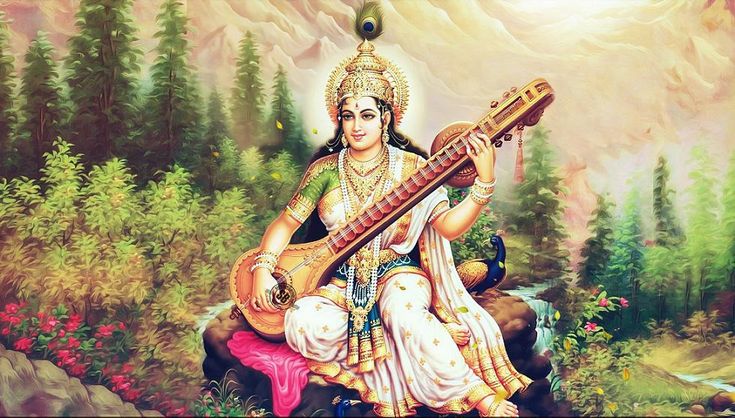
- Music: Music of Bharatnatyam is based on carnatic music. Mridangam and Manjeera are unavoidable musical instruments of this dance. Apart from this, veena, flute, violin etc. are also played with it. The nattuvan plays manjeera and recites the bols.
- Costume: The male dancers wear a stitched dhoti whose flap opens like a crescent moon while sitting. They tie a dupatta or belt on their waist. No garment on the upper is worn and Women wear a stitched blouse with saree and a cloth which opens like a fan when the dancer sits.