

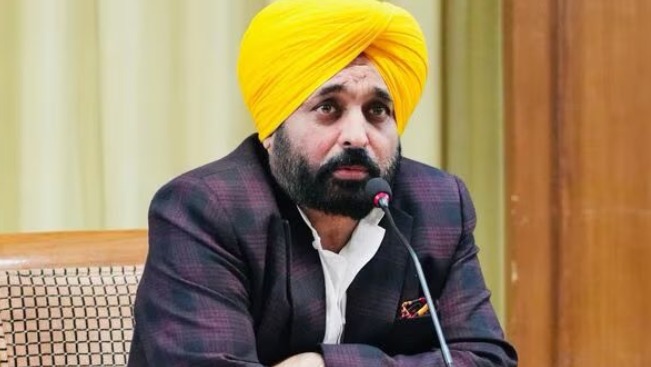
Because of the Mann government’s open policies, business-friendly reforms, and speedy decision-making process, Punjab is now India’s top investment destination.

Punjab today has marked its way in an industrial rebirth led by Chief Minister Bhagwant Singh Mann. The state that previously struggled with unemployment and the agricultural crises has now emerged as the most reliable location for international investment. Because of the Mann government’s open policies, business-friendly reforms, and speedy decision-making process, Punjab is now India’s top investment destination.
Statistics back up this assertion: since 2022, the state has received investment offers totaling over ₹1.23 lakh crore, with the food processing industry making a significant contribution.
Global behemoths Nestle India, PepsiCo India, and Coca-Cola India are in the forefront of this industrial growth and have invested crores of rupees, demonstrating their faith in Punjab’s policies.
These three businesses’ investment has changed the lives of thousands of young people and farmers in addition to giving Punjab’s industrial image a new identity. This is the same Punjab that was before only dependent on agriculture but is now home to numerous advanced, cutting-edge companies.
A historic move has been taken by Nestle India to turn Punjab’s Moga district into a premier hub for food processing. With an investment of ₹583 crore, the company announced in 2024 that it will expand its major factory, increasing its capacity to produce food and process milk. Through Invest Punjab, this project was swiftly approved, and the government offered infrastructure support, capital incentives, and electricity reductions.
In addition to providing hundreds of direct and indirect jobs in the state, this plant will be outfitted with cutting-edge automation technologies. The unique feature is that Punjab’s local farmers and cooperative societies provide 90% of the plant’s milk, which has stabilized rural income and enhanced Punjab’s position in the milk value chain.
Nestle’s investment serves as both an industrial project and a rural development model. As a result, dairy farmers now have access to improved market prices, quality enhancement training, and contemporary technologies. It has been referred to as a “partnership model of farmers and industry” by Chief Minister Bhagwant Mann.
Now, Nestle is getting ready to produce a new line of its dairy, Maggi, and Nescafé goods in Punjab, which will help the state take center stage on India’s food manufacturing map.
At a cost of ₹275 crore, Coca-Cola India has built a state-of-the-art beverage manufacturing facility in Ludhiana that will raise production capacity and establish new environmental protection standards.
This facility is founded on the idea of “Green Growth,” which involves the use of technologies such as trash recycling, solar energy, and water recycling. The Punjab government expeditiously authorized this project and implemented tax incentives, land distribution, and power rate reductions.
In addition to creating hundreds of indirect jobs and dozens of direct jobs, this has strengthened Ludhiana’s industrial environment.
Additionally, PepsiCo India has spent ₹30 crore to expand its food manufacturing facility in the Sangrur area. Through contract farming, hundreds of Punjabi farmers provide the raw materials for this company, which processes potatoes and makes snacks.
PepsiCo has launched a number of initiatives to educate regional farmers about sustainable farming practices, which has enhanced water conservation and production capacity. The government provided particular incentives for energy efficiency and environmentally friendly packaging for this project.
Sangrur has thus not only had industrial success but is also exhibiting a well-rounded model of both industry and agriculture.
The Bhagwant Mann government’s primary characteristic is the connection between environmental balance and development. The state’s new industrial strategy requires all new projects to have zero liquid discharge, rainwater harvesting, and waste recycling.
This has made sure that industrial progress is accompanied by environmental responsibility. For this reason, Punjab is currently referred to as a Green Industrial State, where employment, the environment, and development are all advancing simultaneously.