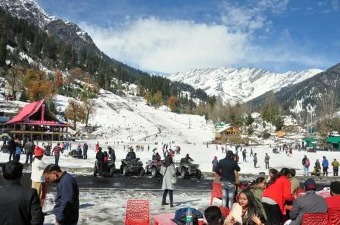

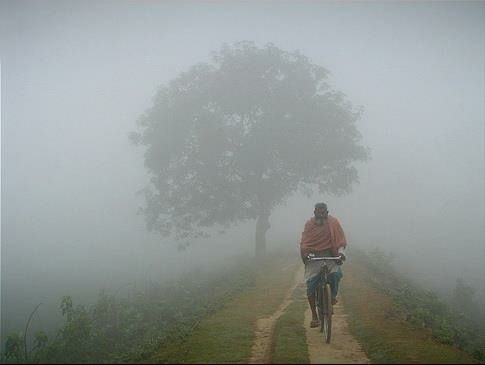
The extra cold winter is related to a La Niña event. La Niña usually impacts North India in December. It’s an oceanic and atmospheric anomaly that results in colder-than-average sea surface temperatures.

It looks like, this year, Punjab may well have a cooler winter and especially for the month of December. We are already starting to see some of the outcomes as it relates to the western disturbances and also La Nina. It has been causing a drop in the temperatures all across the State.
Recently, we have certainly seen a mean drop, especially for the big cities. The reports coming in for the daytime for Jalandhar shows what could roughly be a maximum of about 26 degrees Celsius down to about 11 degrees at night, if we can call that nighttime warmth.
Amritsar is very much about the same, as it is now a maximum of about 26 degrees down about 11 degrees. Ludhiana seems to be a bit warmer during the day, as it is around 25 – 26 degrees Celsius, but night is reportedly around 11 – 12 degrees Celsius in the early mornings when I typically check when Ludhiana has heavy fog making it colder at night. As I said, you can certainly tell winter is coming fast.
Nonetheless, these western disturbance events have been rolling since at least the beginning of November potentially robbing us of average temperatures to drop the temperatures, if we can call them temperatures for a cooler winter, so the nights do get colder and even the mornings, a cold waking up.
Many areas are already reporting their lowest temperature starting to literally be about 2 degrees cooler than the nearby average, which does suggest a faster winter has already started arriving earlier than last year.
The meteorologists indicate that maximum temperatures in the northern and eastern parts of states are forecast to stay around 24°C to 26°C until mid-November. Other areas should show daytime highs at about 26°C to 28°C, with cool nights throughout the period.
Night-time temperatures will be colder. Pathankot, Gurdaspur, and Amritsar could drop to the 6°C to 8°C range while most other areas would remain somewhere between 8°C and 10°C. The northern and western regions of the state will be coldest of all.
The extra cold winter is related to a La Niña event. La Niña usually impacts North India in December. It’s an oceanic and atmospheric anomaly that results in colder-than-average sea surface temperatures in the Pacific Ocean region, facilitating stronger than usual east-to-west winds that transport polar or arctic air over Asian land and into South Asia.
In simple terms, colder oceans equate to vigorous winter wind flows that confer stronger cold winters and anomalous precipitation patterns. In the past, we observed La Niña states in the atmosphere when northern India experienced an unusually strong processes of cold air motion-in and winter weather conditions occurred from October-December with considerable winter snowpack across the mountains and plummeting plains temperatures.
It’s looking like another repeat year. With a strengthening La Niña and western disturbances still around, Punjab—and most of North India—will experience a much colder December as well. Some areas could see cold-wave conditions.