

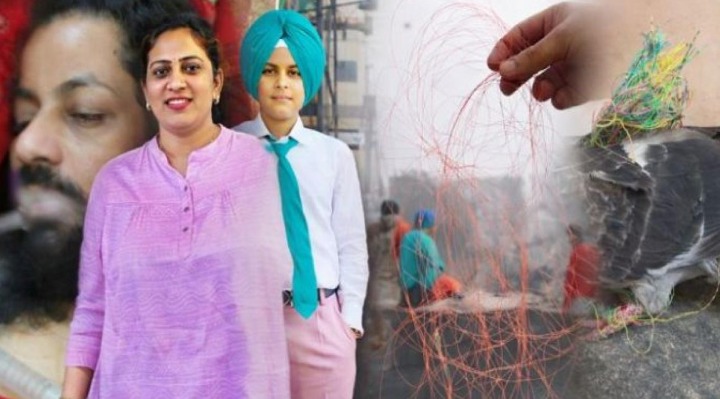
Even with a distinct prohibition, ongoing deaths, and annual public anger, China dor continues to flow freely throughout Punjab’s cities and villages.

The repeated deaths connected to China dor are no longer unfortunate coincidences; they stem directly from bureaucratic stagnation and political apathy. Each throat cut by this keen-edged cord serves as a testament that regulations lacking enforcement are merely hollow declarations.
Even with a distinct prohibition, ongoing deaths, and annual public anger, China dor continues to flow freely throughout Punjab’s cities and villages. Kids on bikes, ladies on scooters, riders on motorbikes, no one is secure.
The issue is no longer why China is killing people, but why the government permits it to persist.
What makes these fatalities especially frustrating is their foreseeability. The authorities are aware of when kite-flying reaches its height. It is aware of the areas where the illicit trade flourishes.
If the ban were effective, China dor would not be accessible on demand via street vendors and online chat groups. If the intention were sincere, suppliers would be incarcerated, not returning to operations after minimal consequences.
If accountability were present, those in charge of enforcement failures would encounter repercussions. All of this is not occurring.
The state government frequently assigns blame, occasionally to smugglers, at times to public conduct, and at other moments to “lack of awareness.” This avoidance overlooks a fundamental reality: public safety is essential, and lack of knowledge is not a justification for administrative shortcomings.
Kite flying is unjustly held responsible for what is fundamentally a failure of regulation.
The core issue is not celebration but the unchecked circulation of a banned and dangerous product. Despite a clear prohibition, China dor continues to cause deaths and serious injuries in Punjab, raising serious questions about enforcement. Responsibility lies not with victims, but with authorities entrusted to prevent its sale and distribution.
Experts and residents argue that temporary advisories and festival-time crackdowns are inadequate. What is needed is sustained action — permanent surveillance of known supply hubs, intelligence-led policing to dismantle distribution networks, swift prosecution, and strict punishment rather than symbolic fines. Clear accountability of district administrations for violations is also essential.
Most importantly, China dor–related deaths should no longer be treated as unfortunate accidents. They are preventable tragedies and reflect systemic enforcement failures. Every life lost highlights gaps between policy and action, and every injury underscores the cost of complacency.
Punjab can no longer afford indifference on this issue. A government unable to enforce its own ban risks losing moral authority. Without decisive and consistent action, the state must bear responsibility for the continuing loss of life caused by this lethal substance.