

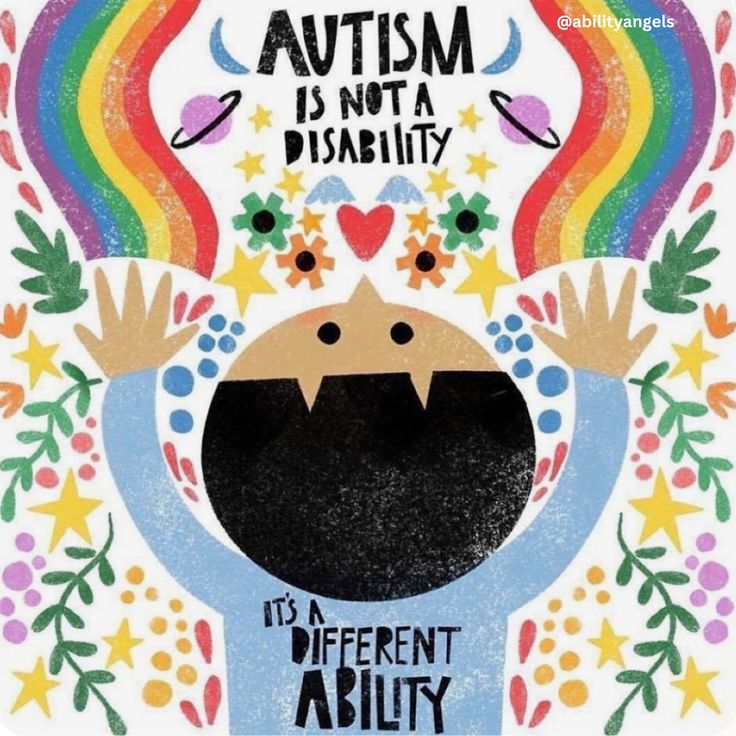

Autism, widely known as Autism Spectrum Disorder (ASD) is a condition that hits neurodevelopment in a person. There exists a wide range of behavioural challenges for a person associated with Autism Spectrum Disorder.
Autism is every autistic consists of different strengths and challenges.
Here are three basic myths and facts of ASD (Autism Spectrum Disorder)
| Sr No. | Myth | Fact |
| 1 | Autism- a disease | Not an illness but a disorder |
| 2 | Autistics are emotionless | People with ASD are sensitive and empathetic. |
| 3 | Autistics have same brain as of normals |
Myth 1: Autism is a Disease.
Where the myth sees the condition as disease, the fact states that it is not an illness but a disorder. Diseases can be cured, disorders can not be. There is no cure to ASD and it cannot outgrow, can get better and its effects may lessen.
Highlights include:
- Every child who is autistic is born autistic.
- There is no autism that grows after birth.
- These neural differences are stemmed in the brain when a child is in the womb.
- The best age to get ASD diagnosed is 18 months.
Some early signs and symptoms include:
- No response to name or sound
- No babbling
- No gestures
- Does not sit with help
- Speech delay
After children attain the age of 24 months, they still have the symptoms like Poor eye contact, Loss of language, No social skills, Repetitive behaviours should be taken to the therapist for diagnosis.
Myth 2: People with Autism are emotionless
Regardless of the myth, the truth is no person on this planet is emotionless. People with ASD may sense or express their emotions in different ways. But considering Autistic people emotionless is unfair.
This even can harm their dignity. People with Autism are sensitive as well as empathetic. With the right techniques, they can learn to express themselves.
Techniques or Therapies:
- ABA (Applied Behaviour Analysis)
- Speech Therapy
- Expression Therapy
Myth 3: People with Autism have the same Brain as Normal people
It is very easily assumed by society that Autistics have the same brain as the normal person. But, the truth is that the brain size of people in the spectrum of Autism is greater or larger than a normal person.
The brain size of the autistic is 3% larger than the normal person. The brains of these people are slightly more symmetrical than the usual brains. This condition is scientific and its effect cannot be lessened by any means.