
Human temperament is a term from ancient scripture. In Bhagavad Gita, it is referred as the Gunas. There are three Gunas and the behavior involved with it.

The perspective of Indian psychology is based on the ideas that developed over 1000 years ago. Father of Indian Psychology is Narendra Nath Sen Gupta. He opened the first laboratory in 1916 in Calcutta University in India.
Nature of Indian Psychology
The nature of Indian Psychology is scientific and has been taken from the Upanishads which are documents that contain central teachings of Hinduism. According to Upanishads, the self and personality is determined with the help of koshas, which means Cover.
Types of Koshas
There are the five koshas that altogether define the behaviour of a human being. All the five koshas are based on five elements of the nature. These are the following Koshas:
- Annamaya Kosha: It is a food sheath, based on the element Earth.
- Pranmaya Kosha: This Kosha is a vital sheath composed of the element Water.
- Manomaya Kosha: It is a mental sheath from the element Fire.
- Vidyamaya Kosha: An intellect Sheath energised by element Air.
- Anandmaya Kosha: A bliss sheath of element Space.

Book reference: Patanjali explained deep thoughts about Consciousness, Koshas, Human Formation and Ashtangyoga in the book named Yogsutra.
The Human Temperament
Human temperament is a term from ancient scripture. In Bhagavad Gita, it is referred as the Gunas. There are three Gunas and the behavior involved with it.
Sattva Guna
The people high on Sattva Guna have the following characteristics. They are spiritual entities and live the life of balance, harmony, creativity, positivity and peace.
Rajas Guna
An individual high on this Guna are energetic, high on desires, anxious, passionate and egoistic.
Tama Guna
The people with Tama Guna are materialistic and are Negative persona holders, Dark humored, Delusional, Depressed and Ignorant.
The Formation of the Human Body
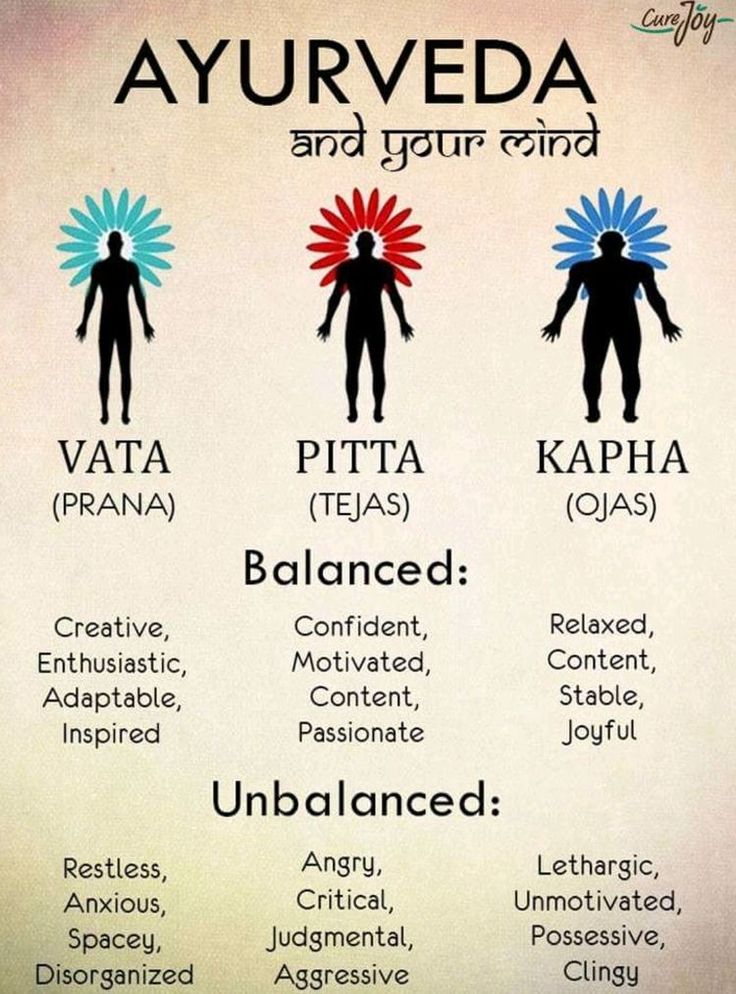
According to Ayurveda, the subtle human body comprises the three doshas. These doshas identify what element of nature one is born with. These are the three doshas namely Vata, Kapha and Pitta.

Vata Dosha
This dosha is associated with movement and wind energy or air element. The people born with this dosha are art lovers, creative, get angry quickly but calms down as well and are dominant. These bodies don’t feel much hot.
Kapha Dosha
Kapha is associated with water elements and stability. The people who have a body of Kapha Dosha are calm, patient, have strong memory, flexible and loving towards their loved ones. These bodies are often average on tolerating heat and cold.
Pitta Dosha
The Pitta body is a body of fire element that is fiery and energetic. A person who is high on Pitta is short tempered, gets angry quickly, is sharp minded, gets affected by warm weather, feels extremely hot, has great leadership skills and is pure by heart.
“The way we behave, our consciousness, our bodies are all science which had been in our scriptures from the time of our ancestors.”