

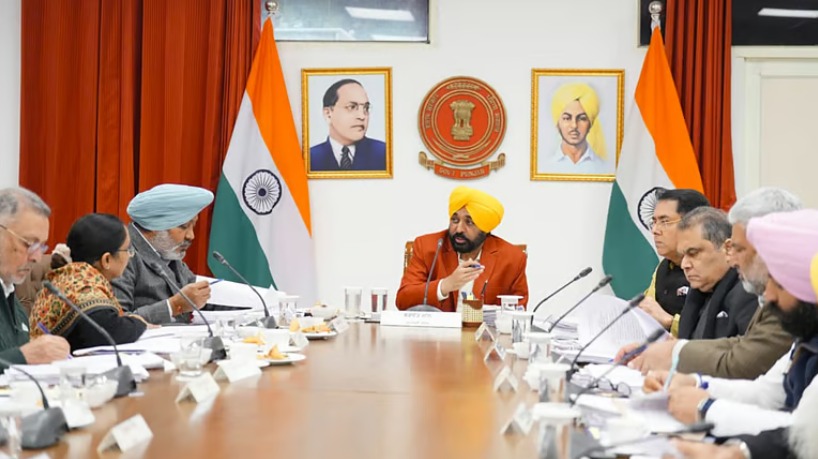
The decision has come ahead to increase the SAP for sugarcane by approving a direct subsidy of Rs 68.50 per quintal for the 2025-26 crushing season.

The Chief Minister of Punjab on Tuesday led the Punjab Cabinet Meeting, approved Rs 68.50 per quintal subsidy for the Sugarcane farmers.
With such a decision, Punjab has become a state with the highest Sugarcane Price across India. This decision taken at the meeting is part of broader policies to secure farmer incomes, boost rural economies, and promote overall development.
Record Sugarcane Subsidy to Boost Farmer Incomes
The decision made on Tuesday has come ahead to increase the State Agreed Price (SAP) for sugarcane by approving a direct subsidy of Rs 68.50 per quintal for the 2025-26 crushing season.
The subsidy reportedly will be paid directly to the farmers on behalf of private sugar mills. And, this will make Punjab’s sugarcane price at Rs 416 quintal which means, Rs 15 higher than the last year. Also, such an amount marks as the highest in the country.
Notably, Sugarcane is the major cash crop for thousands of farmers in Punjab. And, the additional subsidy will protect the growers from rising input costs, delayed mill payments and market uncertainty.The move as well will provide greater income stability to the farmers during crushing season.
According to the Chief Minister’s Office, direct payment of the subsidy will ensure that farmers receive their dues on time, avoiding delays and disputes with sugar mills. The decision underlines the state government’s continued focus on farmer welfare and preparation for future agricultural challenges.
The group of farmers and rural communities have called the move as an important step to support agricultural livelihoods. The authorities believe that such a hike introduced to the price of sugarcane will help reduce rural distress and encourage farmers.
It would be no exaggeration to say that the Punjab State Government is doing wonderful in each and every field. It is not just that the authorities are encouraging agriculture at the local level. However, the government is leading major other initiatives to diversify Agriculture.
International Cooperation to Diversify Agriculture
In a major breakthrough, the Cabinet recently also approved a collaboration with the Japan International Cooperation Agency (JICA). This has been done to promote crop diversification and modern horticulture.
The collaboration with Japan has been made with an objective of introducing Japanese Agricultural Technology. This will help develop cold chain infrastructure, improve water management, and enhance farmer skill sets.
The agriculture in Punjab at major part is dependent on Paddy and Wheat. This puts much pressure on groundwater and limited long-term sustainability.
However, the JICA Partnership with its advanced technology aims at promoting horticulture, improving farm incomes and reducing environmental stress. All such is possibly through crop diversification.
As per the officials, the collaboration marks an important step towards modern and sustainable farming. The need for such was highlighted by the agricultural experts across the country.
Most Importantly, the success of such is directly dependent on effective implementation, financial support for small farmers and continuous training programmes.
Stakeholder Reactions and Wider Agricultural Context
There is no doubt that the Farmers and Farm Unions have welcomed the subsidy but the stress still remains aligned. This is because the matter about timely payments by sugar mills still remains crucial. Although, the government says that the concern is being addressed through the direct payment model.
Punjab Finance Minister Harpal Singh Cheema earlier assured the farmers that the government is committed towards ensuring the payment of sugarcane dues. The authorities also admitted that delays by private mills have long affected farmers’ cash flow.
Agriculturists highlight that while Punjab is a major sugarcane producer, farmers often face price fluctuations and payment delays. With the decision to offer the highest SAP in the country along with a direct subsidy, the state aims to provide income stability even when sugar mills face financial pressure.
Significance and Future Outlook
In the recent days, there have been major announcements and developments laid by the AAP (Aam Aadmi Party) led government in the Punjab State. All the efforts including sugarcane subsidy reveal the government’s effort to balance farmer relief, health and wellness, peace and security, urban reforms and long-term economic diversification.
Last month, in November, the protests were laid in Dasuya because of the non-operation of sugar mills.Major protests were staged in this concern in the last days of November 2025. The distress among farmers intensified, demanding immediate operation of the mills.
Farmers claimed that the sugarcane crop was ready to be harvested, but the non-operations of mills halted the procedures and left the farmers in distress. This was because this could lead to the lesser prices to be offered to them in return for their crop.
And, the Mann Government, with its announcement of the approved subsidy of sugarcane farmers have worked as major relief. The move was much required, and was an economic priority in Punjab.
With elections on the horizon in many states, there are ongoing debates around many of the policies nationwide including agriculture. Punjab with its fierce and strong action for the betterment of its society has played a significant role in balancing price support with structural reforms.